Whether you're a runner, swimmer, tennis player, golfer, or fitness enthusiast, repetitive movements can gradually place stress on your muscles, tendons, ligaments, and other soft tissues. Over time, this repeated strain may lead to pain, inflammation, stiffness, and reduced performance.
In sports medicine, these problems are often called overuse injuries. While rest and rehabilitation are important parts of recovery, acupuncture and electro-acupuncture may offer additional support for managing pain and muscle tension.
WHAT ARE REPETITIVE SOFT TISSUE INJURIES?
Repetitive injuries develop when a particular area of the body is exposed to repeated loading without enough time or capacity to recover. They can result from training too intensely, increasing activity too quickly, poor movement mechanics, or inadequate recovery.
Common examples include:
Tennis elbow: Irritation and pain involving the tendons on the outside of the elbow.
Runner's knee: Pain around or behind the kneecap, often associated with repetitive loading.
Achilles tendinopathy: Pain and stiffness in the tendon connecting the calf muscles to the heel.
Rotator cuff overuse: Shoulder pain associated with repeated overhead movements, common in swimming, tennis, and weight training.
IT band-related pain: Discomfort along the outside of the knee, frequently experienced by runners and cyclists.
Hamstring strains and recurring tightness: Problems that can affect sprinting, running, and other athletic movements.
Although these conditions can feel similar, they do not all have the same underlying cause. A proper assessment helps determine which tissues are involved and what type of rehabilitation is appropriate.
HOW CAN ACUPUNCTURE HELP?
Acupuncture uses fine, sterile needles placed at specific points to stimulate the body's nervous system and influence pain processing. Orthopedic acupuncture involves putting needles into the Motor Points (where the nerve innervates the muscle) with electric stimulation to help weak muscles to function and Trigger Point Needling (often referred to as “Dry Needling”) breaks up tight bands in the muscles.
For people experiencing repetitive sports injuries, acupuncture may help in several ways:
1. Pain modulation
Needle stimulation can activate nervous-system pathways involved in regulating pain. This may help reduce discomfort and make it easier to participate in rehabilitation exercises.
2. Muscle tension and guarding
When an area hurts, surrounding muscles may tighten as a protective response. Acupuncture may help reduce muscle tension and discomfort, potentially improving movement. A frozen shoulder would be one example of this.
3. Supporting comfortable mobility
By addressing pain and muscular guarding, acupuncture may help some people move more comfortably. This can be useful alongside stretching, strengthening, and physical therapy.
WHAT IS ELECTRO-ACUPUNCTURE, AND HOW DOES IT WORK?
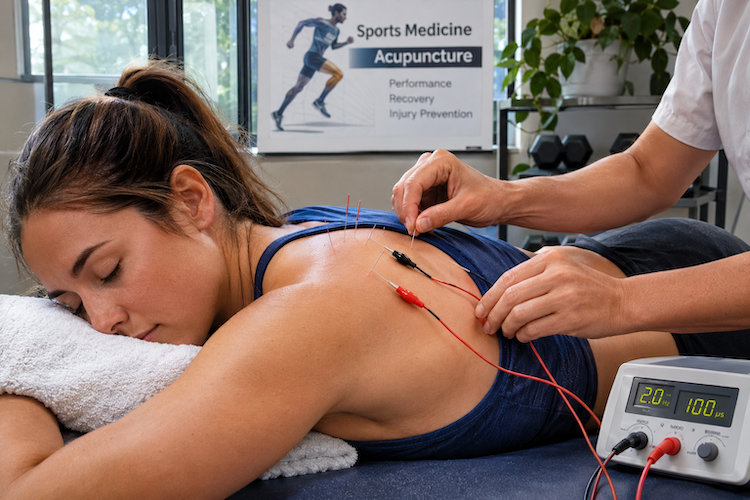
Electro-acupuncture takes traditional acupuncture a step further by connecting small electrical leads to selected acupuncture needles. A gentle, controlled electrical current passes between the needles, producing a rhythmic stimulation, unlike standard electrical stimulation which typically uses adhesive electrodes placed on the skin. Electro-acupuncture delivers stimulation through inserted acupuncture needles.
In sports medicine, electro-acupuncture may be considered for selected cases involving:
Persistent muscle tension and discomfort
Myofascial pain and trigger-point sensitivity
Muscle spasms
Certain tendon-related pain conditions
Pain that interferes with movement and rehabilitation
The electrical stimulation can be adjusted in intensity and frequency according to the treatment goals and the individual's tolerance.
WHY COMBINE ACUPUNCTURE WITH SPORTS REHABILITATION?
One of the most important goals in sports injury treatment is restoring function—not simply reducing pain.
Acupuncture or electro-acupuncture may help manage discomfort so that patients can participate more comfortably in these rehabilitation programs.
A comprehensive approach may include:
Appropriate activity modification and load management
Progressive strengthening exercises
Mobility and flexibility work when indicated
Correction of contributing movement patterns
Acupuncture or electro-acupuncture for complementary pain management
Gradual return to sport
The goal is to address both symptoms and the physical demands that contributed to the injury.
WHEN SHOULD YOU CONSIDER ACUPUNCTURE?
Acupuncture may be worth discussing with a qualified practitioner if you experience recurring muscle tension, activity-related pain, or discomfort that makes it difficult to continue your usual training.
Treatment should be individualized according to the injury, its stage of healing, your activity level, and your overall health.
A new injury with significant swelling, bruising, weakness, inability to bear weight, or sudden loss of function should be medically evaluated before beginning treatment. Electro-acupuncture also requires additional screening, particularly for people with implanted electronic devices or other relevant medical considerations.
SUPPORTING YOUR BODY THROUGH RECOVERY
Repetitive sports injuries are a reminder that athletic performance depends not only on training, but also on recovery. Muscles and tendons need appropriate loading, conditioning, and time to adapt.
Acupuncture and electro-acupuncture may provide an additional tool for managing pain and muscle tension during this process. When combined with a well-designed rehabilitation plan, they may help some athletes return to comfortable movement and gradually resume the activities they enjoy.
At Kara Acupuncture and Wellness, the goal is to look beyond the painful area and consider how movement patterns, muscular tension, and overall physical demands may contribute to discomfort. A thoughtful, individualized approach can help support recovery while keeping long-term function in focus.