
Acupuncture: Beyond the Placebo – What the Science Really Says
One of the most common questions people ask before trying acupuncture is:"Isn't it just a placebo?"
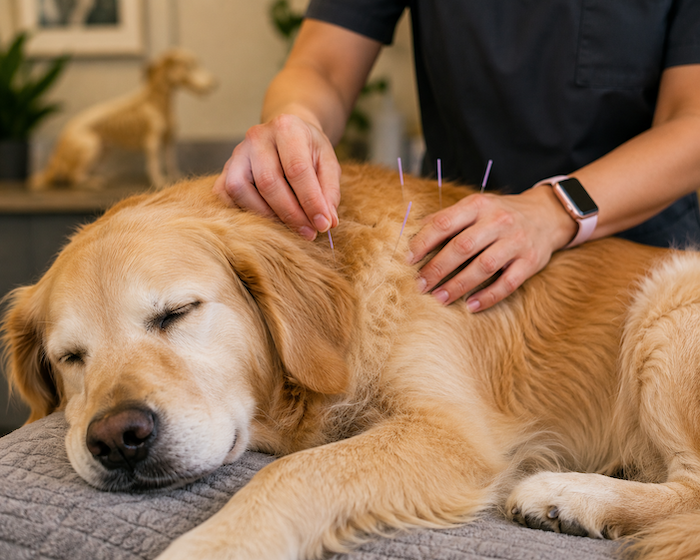
One of the stories I like to tell about this is when my former dog received acupuncture for a strained ligament after chasing a coyote in the woods. I brought her to a veterinary acupuncturist who examined her the way I would. Listened to her pulse, felt around her paw, checked her range of motion, then began to do acupuncture on her. She was incredibly calm not only during the session, but hopped in the car like nothing had happened and then proceeded to sleep 14 hours straight! She didn’t even get up for chicken! She was healed in one session. This really proved to me that acupuncture isn’t just the placebo effect because what do dogs know about placebo? It’s real science.
For decades, researchers have worked to determine whether acupuncture's benefits are simply the result of expectation, or whether measurable biological changes occur when acupuncture needles stimulate the body.
Today, a growing body of scientific evidence suggests that acupuncture is much more than a placebo effect. Modern imaging studies, neurobiology research, and large clinical trials have demonstrated that acupuncture can activate the nervous system, influence immune function, regulate pain pathways, and produce measurable physiological changes.
Let's examine what science tells us.
WHAT IS THE PLACEBO EFFECT?
The placebo effect occurs when a person's symptoms improve because they believe they are receiving an effective treatment—even if the treatment itself has no active therapeutic ingredient.
Placebo responses can produce real changes in:
Pain perception
Mood
Stress levels
Fatigue
Sleep quality
The brain is remarkably powerful, and expectations can influence how we experience symptoms.
However, the presence of a placebo effect does not mean a treatment lacks genuine biological activity. Many effective medical therapies—including surgery, medications, and physical therapy—can also involve placebo effects alongside their direct physiological actions.
The key scientific question is whether acupuncture produces measurable effects beyond what can be explained by expectation alone.
MEASURING ACUPUNCTURE SCIENTIFICALLY
Researchers study acupuncture using several methods:
Randomized controlled trials
Sham acupuncture comparisons
Functional MRI (fMRI)
PET brain imaging
Blood biomarkers
Heart rate variability testing
Neurochemical analysis
These studies allow scientists to observe whether acupuncture changes the body in measurable ways.
BRAIN IMAGING SHOWS REAL CHANGES
Functional MRI studies consistently demonstrate that acupuncture alters activity in multiple regions of the brain involved in pain processing and emotional regulation.
Areas affected include:
Anterior cingulate cortex
Insula
Thalamus
Somatosensory cortex
Prefrontal cortex
Amygdala
These changes differ from those seen with sham acupuncture and correlate with improvements in pain reported by patients.
Rather than simply distracting the brain, acupuncture appears to influence neural networks that regulate pain perception and sensory processing.
ACUPUNCTURE TRIGGERS NATURAL PAIN RELIEF
One of the best-established effects of acupuncture is the release of the body's own pain-relieving chemicals.
Research has shown acupuncture can stimulate the release of:
Endorphins
Enkephalins
Dynorphins
Serotonin
Norepinephrine
These neurotransmitters help:
Reduce pain
Improve mood
Promote relaxation
Support nervous system regulation
Unlike opioid medications, acupuncture encourages the body to utilize its own endogenous pain-control systems.
HARVARD RESEARCH IDENTIFIED SPECIFIC NEURONS
In 2021, researchers at Harvard Medical School published groundbreaking work in the journal Nature identifying a specific group of sensory neurons activated by electro-acupuncture.
Their research demonstrated that stimulation of the acupuncture point ST36 (Zusanli) activated specialized sensory neurons that signaled the brainstem and engaged the vagal-adrenal anti-inflammatory pathway.
Activation of this pathway led to the release of catecholamines from the adrenal glands, significantly reducing inflammatory cytokines in mice with experimentally induced inflammation.
Perhaps most importantly, researchers found that the response depended on stimulating the correct anatomical location. The effect could not be reproduced by simply placing needles anywhere on the body.
While these mechanistic studies were conducted in animal models, they provide strong biological evidence that acupuncture activates specific neural circuits rather than acting through suggestion alone.
ACUPUNCTURE INFLUENCES THE AUTONOMIC NERVOUS SYSTEM
Stress activates the sympathetic nervous system—the body's "fight-or-flight" response.
Chronic activation contributes to:
Muscle tension
Elevated heart rate
Poor sleep
Digestive problems
Increased inflammation
Chronic pain
Numerous studies suggest acupuncture helps shift the body toward greater parasympathetic ("rest-and-digest") activity.
Researchers have measured improvements using heart rate variability (HRV), a marker of autonomic nervous system balance.
Many patients report feeling deeply relaxed during and after treatment, and these subjective experiences are accompanied by measurable physiological changes.
LARGE CLINICAL TRIALS SHOW BENEFITS BEYOND SHAM TREATMENT
One of the strongest pieces of evidence comes from large meta-analyses.
A landmark individual patient data meta-analysis published in The Journal of Pain evaluated nearly 18,000 patients with chronic pain.
The researchers found that:
Acupuncture was significantly more effective than no treatment.
Acupuncture also performed better than sham acupuncture.
Benefits persisted over time for many patients.
These findings suggest that while expectation may contribute to some improvement, acupuncture itself has specific therapeutic effects that exceed placebo alone.
THE PLACEBO DEBATE IS MORE COMPLEX THAN IT SEEMS
Studying acupuncture presents unique challenges.
Unlike testing a pill, it is difficult to create a perfect placebo because even superficial needle stimulation may activate sensory nerves and produce physiological responses.
Some "sham" acupuncture techniques involve:
Needling at non-traditional locations
Very shallow needle insertion
Retractable needles that simulate insertion
Even these approaches may stimulate the nervous system, making it harder to distinguish acupuncture's full effects from the comparison treatment.
For this reason, sham acupuncture is not always biologically inactive.
CONDITIONS WITH THE STRONGEST EVIDENCE
Research supports acupuncture as a complementary treatment for several conditions, including:
Chronic low back pain
Neck pain
Knee osteoarthritis
Migraine prevention
Tension-type headaches
Postoperative nausea and vomiting
Chemotherapy-related nausea
Evidence is also growing for its role in managing stress-related disorders, temporomandibular joint (TMJ) dysfunction, and certain musculoskeletal conditions.
The strength of evidence varies by condition, and acupuncture is best viewed as part of a comprehensive treatment plan rather than a cure-all.
WHY PATIENTS OFTEN FEEL BETTER
Acupuncture's effects likely result from several overlapping mechanisms rather than one single pathway.
Research suggests acupuncture may:
Activate sensory nerves
Influence spinal cord pain processing
Regulate brain activity
Increase natural pain-relieving neurotransmitters
Improve local blood flow
Modulate inflammatory signaling
Reduce muscle tension
Support autonomic nervous system balance
Together, these effects help explain why many patients report improvements in pain, sleep, stress, mobility, and overall well-being.
INTEGRATING ANCIENT WISDOM WITH MODERN SCIENCE
Traditional Chinese Medicine has described acupuncture's effects for more than 2,000 years using concepts such as Qi and meridians.
Modern medicine explains these effects through neuroscience, connective tissue physiology, autonomic regulation, and immune signaling.
Although the frameworks differ, both recognize that stimulating specific points on the body can produce widespread physiological effects.
As research advances, these two perspectives continue to complement one another.
FINAL THOUGHTS
The placebo effect is a fascinating and genuine aspect of human biology, but it does not fully explain acupuncture.
Modern research has demonstrated that acupuncture can activate identifiable neural pathways, influence neurotransmitter release, regulate the autonomic nervous system, and affect inflammatory processes. Large clinical trials have also shown benefits that extend beyond placebo or sham acupuncture in many chronic pain conditions.
While researchers continue to investigate exactly how acupuncture works and which conditions respond best, the growing body of evidence suggests that acupuncture is more than simply "mind over matter." It is a complex therapy that engages the nervous system and supports the body's own capacity for regulation and healing.
For patients seeking a non-drug, evidence-informed approach to pain management and stress reduction, acupuncture remains an increasingly respected option within integrative healthcare.