Why Your Body Holds Tension Even When You’re “Relaxing”
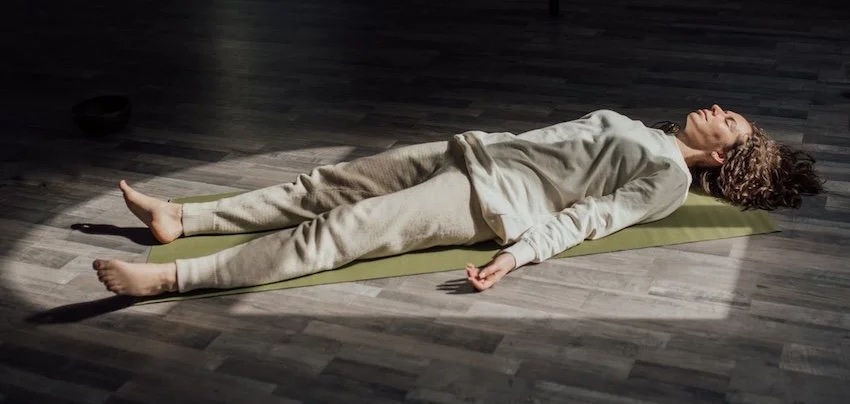
Photo by Arina Krasnikova from Pexels
You finally sit down. The day is over. You’re not working, not moving, not stressed—at least consciously.
And yet… your shoulders are still tight, your jaw is clenched, your neck feels stiff, and your body doesn’t actually feel relaxed.
If this sounds familiar, you’re not imagining it.
Your body can hold tension even when your mind thinks it’s relaxed.
From both a modern neuroscience and acupuncture perspective, this happens because relaxation isn’t just about stopping activity—it’s about how your nervous system is functioning underneath the surface.
THE ILLUSION OF RELAXATION
Most people define relaxation as:
Sitting down
Watching TV
Scrolling on their phone
Lying in bed
But physically, the body may still be:
Holding muscle tension
Breathing shallowly
Staying in a low-level stress response
Relaxation is not the absence of activity - it’s the presence of nervous system regulation.
YOUR NERVOUS SYSTEM IS STILL “ON”
Your body operates through two main states:
Sympathetic (fight-or-flight)
Parasympathetic (rest-and-repair)
Even when you’re “resting,” your body may still be stuck in a mild sympathetic state.
Why this happens:
Chronic stress throughout the day
Constant stimulation (phones, screens, noise)
Lack of true downtime
Habitual tension patterns
This creates a baseline where your body never fully “turns off.”
MUSCLE MEMORY: YOUR BODY LEARNS TENSION
Over time, your body adapts to stress by creating habitual tension patterns.
Common areas include:
Neck and shoulders
Jaw (TMJ)
Low back
Hips
These patterns become automatic, meaning, our muscles stay tight even when there’s no immediate reason.
SHALLOW BREATHING KEEPS YOU STUCK
One of the most overlooked causes of persistent tension is how you breathe.
When stressed, breathing becomes:
Shallow
Chest-dominant
Rapid
Even at rest, many people don’t return to deep diaphragmatic breathing.
This signals to the body:
“We’re still not safe enough to fully relax.”
THE MIND-BODY DISCONNECT
You can mentally decide to relax—but your body doesn’t always follow.
Why?
Because the body responds more to:
Nervous system patterns
Physiological signals
Habitual responses
…than to conscious thought.
That’s why you can say:
“I’m fine, I’m relaxing”
…but your body still feels tense.
A TCM PERSPECTIVE: STAGNATION AND INTERNAL STRESS
In acupuncture and Traditional Chinese Medicine, this state is often described as:
Qi stagnation (lack of flow)
Liver imbalance (stress, tension, emotional holding)
When Qi doesn’t move freely:
Muscles tighten
Circulation decreases
The body feels stuck
This can persist even during rest because the underlying imbalance hasn’t been resolved.
HOW ACUPUNCTURE HELPS YOU ACTUALLY RELAX
Acupuncture works by addressing the root cause of tension: the nervous system.
1. Shifts You Into Parasympathetic State
Acupuncture helps the body move out of fight-or-flight and into true rest-and-repair mode.
2. Releases Stored Muscle Tension
Needling specific points resets muscle tone and reduces chronic holding patterns.
3. Improves Circulation
Better blood flow helps tissues relax and recover.
4. Regulates Stress Hormones
Acupuncture can reduce cortisol and calm the body’s stress response.
5. Reconnects Mind and Body
Many patients feel, often for the first time:
“Oh… THIS is what relaxed actually feels like.”
SIGNS YOUR BODY ISN’T TRULY RELAXING
You might still be holding tension if you notice:
Tight shoulders even at rest
Jaw clenching or teeth grinding
Shallow breathing
Difficulty “turning your mind off”
Waking up feeling unrested
Constant low-level stiffness
WHAT ACTUALLY HELPS YOU LET GO
Nervous System Regulation
Acupuncture
Breathwork
Meditation (done correctly - not forced)
Movement
Gentle movement helps release stored tension patterns.
Awareness
Simply noticing where you hold tension is the first step to releasing it.
Consistency
One moment of relaxation isn’t enough. You need to retrain the system.
THE ACUPUNCTURIST’S TAKEAWAY
If your body feels tense even when you’re “relaxing,” it’s not a failure - it’s a signal.
Your nervous system hasn’t fully shifted into a state where it feels safe enough to let go.
Acupuncture helps bridge that gap by:
Resetting the nervous system
Releasing stored tension
Restoring flow and balance
Because true relaxation isn’t something you force. It’s something your body learns how to return to.